
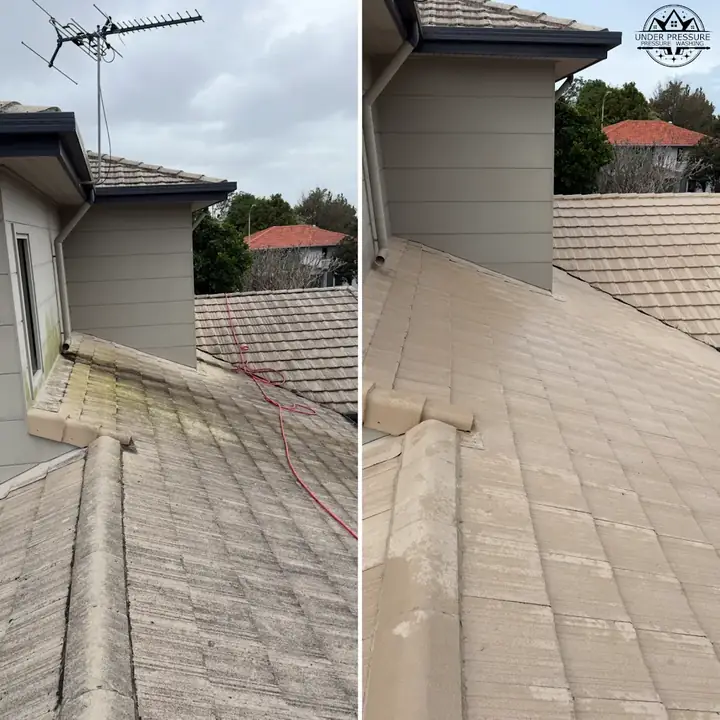
What's the actual difference?
It comes down to what does the cleaning. Pressure washing uses force: a high-pressure stream of water strips dirt, mould and stains off the surface. Soft washing uses chemistry: water at about garden-hose pressure carries a biodegradable solution that kills mould, algae, lichen and mildew, and then the dead growth rinses away.
Our pressure cleaning runs on hot-water machines at up to 4,000 PSI, after a biodegradable degreaser. Our soft wash runs at low pressure with a professional-grade biodegradable solution. Same crew, very different tools.
| Pressure washing | Soft washing | |
|---|---|---|
| How it cleans | Hot water at high pressure, after a degreaser | Low pressure plus a solution that kills growth at the root |
| Use it on | Concrete driveways, brick paving, pool surrounds, fences, garage floors, car parks | Render, painted walls, weatherboard, fibre cement, eaves, fascias, soffits, tile and metal roofs |
| If it goes wrong | Strips paint, gouges render, cracks mortar, moves roof tiles, pushes water behind cladding | Little risk to the surface; gardens are pre-watered and protected |
| How long it lasts | Takes off what you can see; spores left behind regrow | Kills the growth, so it typically lasts two to three times longer |
Which surfaces should never be pressure washed?
Tiled roofs, render, anything painted, weatherboard, timber and fibre cement cladding, and older or softer masonry. On a roof, high pressure damages the ridge capping mortar, moves tiles, can void the manufacturer's warranty and forces water under the roofline. On walls it takes paint and render with it.
We never pressure wash tiled roofs. The roof cleaning page explains what we do instead.
When is pressure washing the right call?
When the surface is hard and the dirt is ground in. Concrete driveways, brick paving, pool surrounds, paths, garage floors and car parks all clean up well. Even then we set the pressure for the material. Plain concrete can take the full treatment. Stamped or coloured concrete and older pavers get a gentler setting.
Oil is its own job. A degreaser plus hot water shifts most of it. Fresh stains usually come out completely, while very old ones fade a lot but may not disappear. See driveway cleaning.
Why does soft washing last longer here?
The Gold Coast is humid, it rains hard in summer, and shaded walls stay damp for days. Mould and algae love that. Blasting the growth off the surface leaves spores in the render or paint, and they come back quickly. A soft wash kills the growth itself, so the wall stays clean for longer.
So which does my house need?
Usually both, on different parts of the property. A typical job is a soft wash of the walls, eaves and roof, and a pressure clean of the driveway, paths and entertaining area. You don't need to work this out yourself. We sort out the method for each surface when we quote.
Related services
- Home Wash & Soft Wash Services
- Professional Pressure Washing Services
- Professional Roof Cleaning Services
- Professional Driveway Cleaning Services
More guides
- How much does house washing cost on the Gold Coast?
- Why mould keeps coming back on Gold Coast homes, and how to slow it down
- How often should coastal and beachfront Gold Coast properties be cleaned?
- What does a full exterior clean include, and how do you book one?
- Exterior cleaning before you sell or go to auction on the Gold Coast
- Cleaning pavers, patios and pool surrounds on the Gold Coast
- Exterior cleaning for strata and body corporate properties: a guide for managers and committees
- Roof soft washing on the Gold Coast: tiled, metal and older roofs
- All exterior cleaning FAQs