
Which surfaces do you clean?
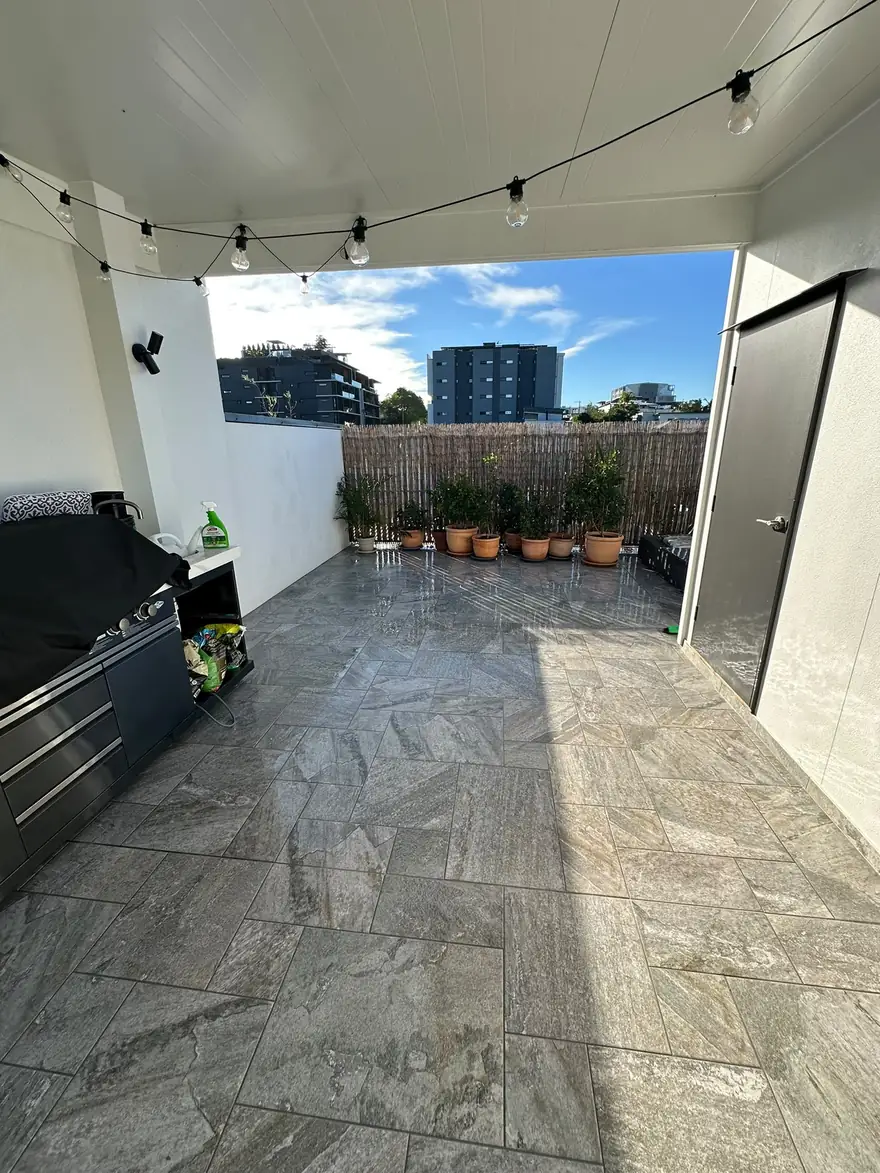
Plain, exposed aggregate, coloured, stamped and stencilled concrete. Brick and block pavers, natural stone, sandstone and cobblestone. Tiled patios and alfresco floors, verandahs, pool surrounds and timber decks. Each takes a different setting and technique, so we look at the surface before anything gets turned on.
Why are my pavers slippery?
Algae. It grows on damp, shaded surfaces and turns slick when wet, and pool surrounds are wet a lot. Hosing or scrubbing takes the top layer off but leaves the growth in the pores. We put a biodegradable treatment on first to kill it, then pressure clean it out of the surface. The difference in grip is usually obvious straight away.
How do you clean sandstone and softer stone?
Gently. Sandstone is soft and porous, so high pressure can erode the face and leave wand marks. We pre-treat, clean at a low setting and rinse thoroughly. Avoid acid-based cleaners on sandstone and many natural stones, because they can etch and discolour it.
What's the safest way to clean pool tiles and pool surrounds?
Match the method to the material and keep runoff out of the pool as much as possible. Tiled surrounds and stone coping get a lower pressure than a concrete driveway. Our cleaning solutions are biodegradable, and we rinse thoroughly. If you have a salt or chlorine pool, it's worth checking the water balance after any big outdoor clean. Glass pool fencing can be cleaned in the same visit with our window cleaning service.
Can you remove rust, oil and spill stains from pavers?
Oil and food or drink spills usually respond well to a degreaser and hot water, with very old stains fading rather than disappearing. Rust is a mineral stain, and pressure alone won't remove it, so send us a photo and we'll tell you honestly what to expect.
Is sealing worth it?
If you want the surface to stay clean longer, yes. Sealer bonds properly only to clean, dry pavers, so the time to do it is straight after a clean. A sealed surface resists oil and algae better and is easier to clean next time. Ask about post-clean sealing when you get a quote.
How often should outdoor areas be cleaned?
Every 12 to 18 months for most, and more often for shaded areas and pool surrounds, which grow algae faster. If you entertain a lot, book a clean a few days before a big event so everything has time to dry.
Cafes, resorts and apartment complexes
We clean courtyards, pool areas and walkways for hospitality venues and strata complexes too, usually outside trading hours or when residents are least affected. See commercial washing.
Suburbs where this comes up most
Benowa · Hope Island · Mermaid Beach · Clear Island Waters · Mermaid Waters · Runaway Bay
Related services
More guides
- Soft washing vs pressure washing: which does your Gold Coast home need?
- How much does house washing cost on the Gold Coast?
- Why mould keeps coming back on Gold Coast homes, and how to slow it down
- How often should coastal and beachfront Gold Coast properties be cleaned?
- What does a full exterior clean include, and how do you book one?
- Exterior cleaning before you sell or go to auction on the Gold Coast
- Exterior cleaning for strata and body corporate properties: a guide for managers and committees
- Roof soft washing on the Gold Coast: tiled, metal and older roofs
- All exterior cleaning FAQs